

AlphaTheta launched a player with cloud streaming and real-time crowd requests. The feature sounds harmless, but it touches the most sensitive nerve in club culture: what's left of the DJ as author when the floor gets to vote.
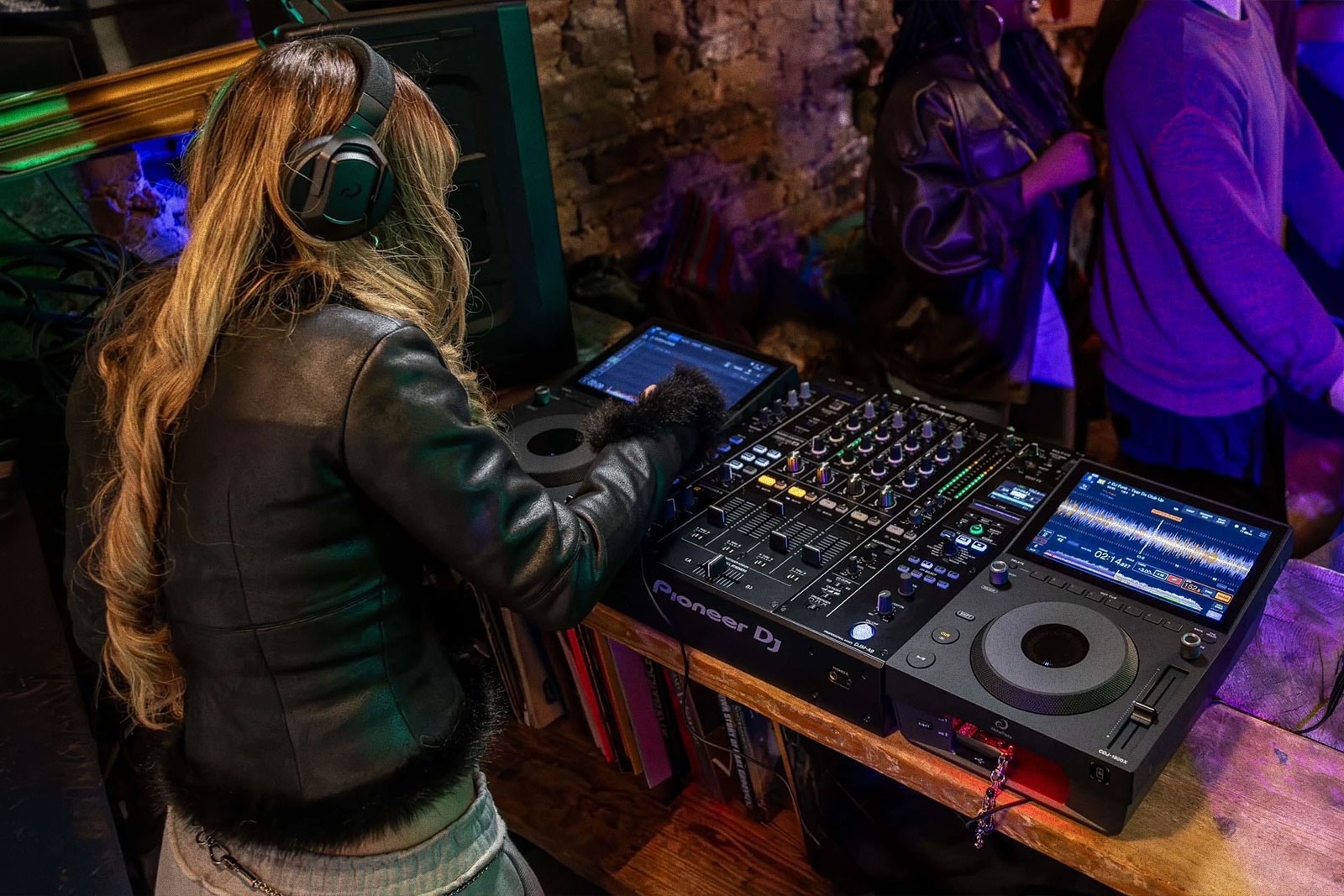
Every technical innovation carries a hidden cultural argument that exceeds it. AlphaTheta's new CDJ-1500X — with touchscreen, Wi-Fi, direct streaming access and a real-time crowd-request feature — looks, at first glance, like a simple hardware update for DJs. In fact, it poses a question the scene has been avoiding for years.
The feature is called CoBeat, and it lets people on the floor suggest tracks directly to the DJ mid-set, from their phones. On paper, it sounds flawless: participation, closeness, community, the party as a two-way conversation instead of a monologue from above. In practice, it grazes the heart of what DJing means, and that's where the interesting problem begins.
Curation is the craft
The DJ's historic value was never technical. Beatmatching two records can be learned in an afternoon; syncing two tracks is done by a button today. What sets a great DJ apart is the curatorial: the ability to read a floor, hold a tension, risk a strange track at the right moment and take people to an emotional place they didn't know they wanted to go. A good set is a narrative with structure: introduction, build, climax, resolution.
When the floor can request in real time, the concrete danger is that the DJ turns into an executor of immediate desires, and the set inevitably flattens toward what already works, the familiar, the safe hit. It is, point for point, the same logic as the recommendation algorithm of streaming platforms — give me more of what I already like — transplanted into the booth. And that logic, we know, doesn't lead to discovery: it leads to repetition.
The club culture worth defending isn't the one that gives people what they ask for, but the one that shows them something they didn't know they were looking for.
Don't demonize the tool
It would be easy, and rather lazy, to condemn the feature and stop there. The truth is more nuanced. Used well, the cloud connection and real-time data can free the DJ from mechanical tasks, give useful information about the room's energy and even open new, unforeseen ways to play. The tool, on its own, decides nothing; who uses it, and with what judgment, does.
The problem, at heart, isn't that the crowd can request. DJs have received requests all their lives, on scraps of paper or whispered in the ear, and always knew when to heed them and when to ignore them with a smile. The problem is cultural: what happens when the interface turns the request into the norm, into the expected, and when resisting it starts to look like arrogance rather than craft.
What's at stake
That's where a difference is decided that goes beyond the DJ and defines the present of almost all cultural consumption: the difference between a service and an experience. A service gives you what you ask for, fast and frictionless. An experience takes you somewhere, and to do that it sometimes has to contradict you.
The CDJ-1500X's feature is neither good nor bad in itself. It's a mirror. It will reveal what kind of DJ each person is, and what kind of dancefloor each club wants. The question it leaves isn't about technology: it's about why, in the end, someone steps into a booth at all.
The tool doesn't decide on its own: who uses it does. The question the CDJ-1500X leaves isn't about technology, it's about why we step into a booth at all.